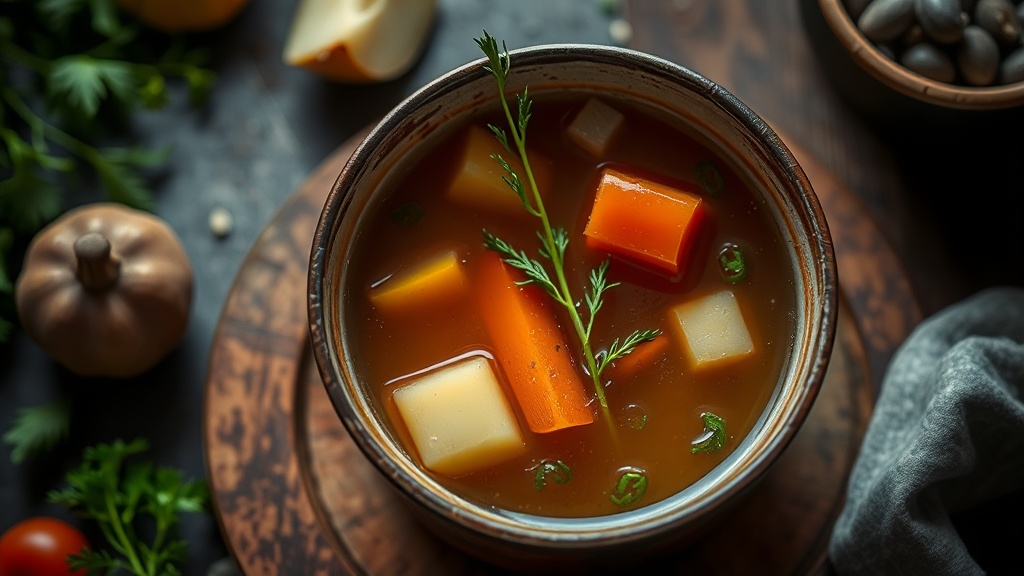
Ways to Make Cheap Vegetable Broth That Actually Tastes Good

The bottom of your crisper drawer is likely filled with the very ingredients you need to make a high-quality vegetable broth. Instead of tossing those wilted carrot tops, onion skins, or celery ends into the trash, you can transform them into a rich, savory liquid that serves as the foundation for soups, risottos, and stews. Making your own vegetable broth is one of the most effective ways to reduce food waste and lower your weekly grocery bill, as it turns "trash" into a valuable pantry staple for pennies on the dollar.
Store-bought cartons of vegetable broth are often surprisingly expensive and frequently contain high amounts of sodium or additives you might want to avoid. By learning how to control the ingredients and the simmering process, you can create a flavorful, nutrient-dense liquid that tastes much better than the commercial versions. This guide covers the specific ingredients, techniques, and storage methods you need to master homemade vegetable broth on a budget.
The Best Vegetables for Flavorful Broth
The secret to a broth that doesn't taste like "hot water" is the variety and quality of your aromatics. You want a balance of sweetness, earthiness, and savory depth. While any vegetable can technically go into a pot, certain combinations yield much better results.
The Holy Trinity of Aromatics: Most great vegetable stocks start with the mirepoix base: onions, carrots, and celery. These provide a consistent, foundational flavor. If you are using scraps, ensure the onion skins are clean and the celery stalks aren't completely slimy. Onion skins, in particular, add a beautiful golden color to the liquid, which is a trick I use often to make the broth look more appetizing.
Adding Depth with Umami: To avoid a thin or one-dimensional taste, you need ingredients that provide "umami," the savory fifth taste. Dried mushrooms (like Shiitake or Porcini) are excellent for this, but if those are too pricey, use dried kombu (seaweed) or even a few leftover pieces of hard cheese rinds like Parmesan. These additions add a profound depth of flavor without needing expensive meat-based stocks.
Greenery and Herbs: Parsley stems, leek tops, and even the leafy greens from beet bunches add a bright, fresh note. Be careful with brassicas like broccoli or cabbage; while they are cheap, they can make a broth taste bitter or sulfurous if boiled for too long. If you do use them, add them toward the end of the process.
Before you start, make sure you stop throwing away your vegetable scraps and instead start a "stock bag" in your freezer. This is a gallon-sized freezer bag where you keep clean, unused scraps until you have enough to make a full batch.
Three Methods for Making Broth
Depending on how much time you have and the intensity of flavor you want, you can choose from three distinct methods. Each has its place in a busy household.
1. The Slow Simmer (The Traditional Method)
This is the most common method and produces a classic, clear broth. It is perfect for making large batches that you plan to freeze and use over several weeks.
- Step 1: Place your vegetable scraps in a large stockpot.
- Step 2: Cover with cold water. Always start with cold water to help extract the flavors more gradually.
- Step 3: Bring to a boil, then immediately reduce to a low simmer.
- Step 4: Simmer for 45 to 60 minutes. Do not overcook it; if you simmer vegetables for hours, the liquid can become cloudy and bitter.
- Step 5: Strain through a fine-mesh sieve and let cool before storing.
2. The Roasted Method (For Maximum Flavor)
If you want a broth that is deeply caramelized and rich, roasting your vegetables first is the way to go. This is slightly more labor-intensive but results in a much more robust liquid.
- Step 1: Chop your vegetables into larger chunks (onions, carrots, parsnips).
- Step 2: Toss them in a tiny bit of oil and roast in a 400°F oven until the edges are browned and slightly charred.
- Step 3: Place the roasted vegetables in a pot and add water.
- Step 4: Simmer for 30-45 minutes. The roasted notes will infuse into the water, creating a dark, savory broth.
3. The Instant Pot Method (The Fast Way)
When you need a base for a soup tonight and don't have hours to wait, use a pressure cooker. This method extracts flavor very quickly and is highly efficient.
- Step 1: Add your vegetables and water to the Instant Pot.
- Step 2: Set the pot to "High Pressure" for 15-20 minutes.
- Step 3: Allow a natural pressure release rather than a quick release to prevent the liquid from foaming out of the valve.
- Step 4: Strain and use immediately.
Common Mistakes to Avoid
Even with the best ingredients, it is easy to make a broth that tastes "off." Here are the most frequent errors I see in home kitchens.
Using Bitter Vegetables: Avoid using too much kale, radicchio, or excessive amounts of cauliflower. These can impart a medicinal or bitter aftertaste to the broth. If you want to use these, keep the quantity small and use them as a minor accent rather than the main component.
Salt Timing: One of the biggest mistakes is salting the broth while it is simmering. Because the liquid will reduce as it cooks, the salt concentration will increase. It is much better to make an unsalted or very lightly salted broth and season the final dish (like your soup or risotto) at the very end. This gives you total control over the sodium levels.
Using Old Spices: If you are adding herbs or spices to your broth to deepen the flavor, ensure they are fresh. If your dried thyme or peppercorns have lost their punch, they will add nothing to your broth but a dull, dusty flavor. If you aren't sure, check why your spices are losing flavor to see if it's time to restock your pantry.
Storing and Freezing Your Broth
Since you are likely making a large batch to save money, knowing how to store it properly is vital to prevent spoilage and maintain flavor.
Refrigeration: If you plan to use the broth within 5 to 7 days, store it in an airtight glass jar or container in the refrigerator. Always ensure the broth has cooled to room temperature before putting it in the fridge to avoid raising the temperature of other perishables.
Freezing for Long-Term Use: This is the best way to manage a budget. You can freeze broth in several ways:
- Ice Cube Trays: Freeze the broth in standard ice cube trays. Once frozen, pop the cubes into a freezer bag. These are perfect for adding a "splash" of flavor to a pan sauce or a small portion of grains.
- Mason Jars: If using glass jars, leave at least two inches of "headspace" at the top. Liquid expands when it freezes, and if the jar is too full, the glass will crack.
- Ziploc Bags: Lay the bags flat on a baking sheet to freeze. Once they are solid, you can stand them up in the freezer like books, saving significant space.
A Practical Example: The "Scrap Bag" Recipe
To give you a concrete idea of how this works in a real kitchen, here is a standard "recipe" I use when my freezer bag is full. This isn't a strict recipe because the ingredients change based on what I've bought that week, but it follows a reliable ratio.
The Components:
• 2 parts Onion (skins and ends included)
• 1 part Carrot (peelings and ends)
• 1 part Celery (stalks and base)
• 1 part Leek (green tops)
• 1 part Parsley (stems)
• 1 part Mushroom stems (for umami)
• 1 tablespoon Whole Black Peppercorns
• 2 Bay Leaves
• 1 Gallon of Water
The Process:
I combine these in my large stainless steel pot, cover with the gallon of water, and simmer on low for 50 minutes. I always keep an eye on the water level; if it drops too low, I add a little more hot water to keep the vegetables submerged. After straining, I divide the liquid into 2-cup portions in freezer bags. This allows me to pull out exactly what I need for a single batch of soup without thawing a massive container.
By mastering this simple skill, you aren't just making a soup base; you are practicing a fundamental part of budget-friendly, zero-waste cooking. You are taking the leftovers of your previous meals and turning them into the foundation for your next one.