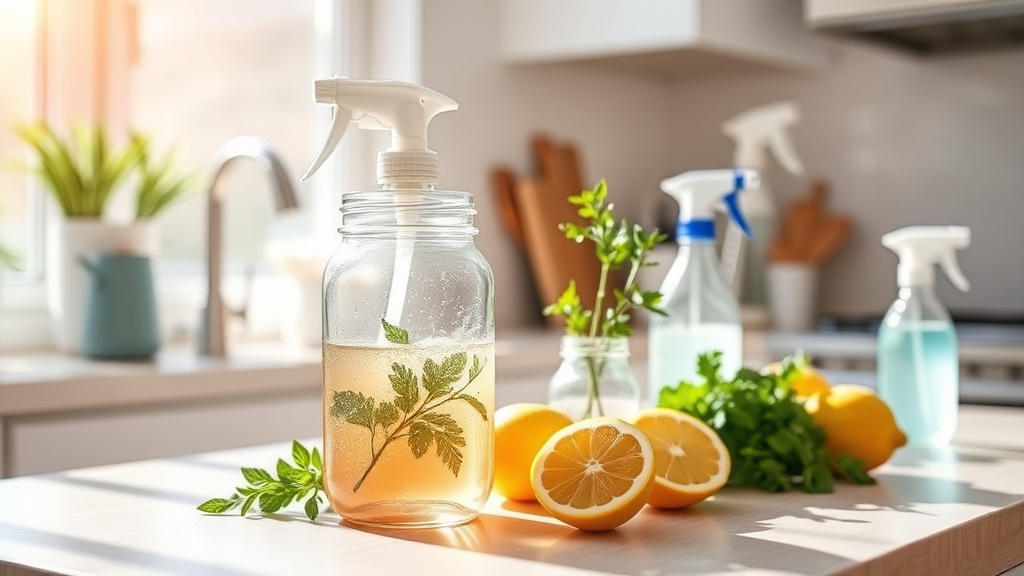
Eco‑Friendly Spring Cleaning: Homemade Cleaners Using Pantry Staples

Hook:
Ever stared at a shelf of pricey, chemical‑laden cleaning products and wondered if there’s a cheaper, safer way? You’re not alone—more families are swapping store‑bought sprays for pantry‑made potions, and spring is the perfect time to start.
Context:
Daylight‑saving time gives us longer evenings, which means extra daylight for tackling those forgotten corners. Plus, a recent New York Times piece highlighted a surge in readers looking for low‑tox, budget‑friendly home habits. Let’s harness that momentum.
Why choose homemade eco‑friendly cleaners?
- Healthier air: No harsh VOCs or synthetic fragrances to irritate lungs.
- Kid‑safe: Simple ingredients mean fewer accidental poisonings.
- Cost‑effective: A few pantry staples can replace dozens of commercial bottles.
- Environmental impact: Less plastic waste and biodegradable formulas.
"I stopped buying store cleaners and saved over $30 a month while feeling better about the chemicals in my home," — Maria.
What pantry staples can you use?
| Ingredient | Primary Cleaning Power | Typical Cost (per unit) |
|---|---|---|
| White vinegar | Acids dissolve grime, kills mold | $1.20 per gallon |
| Baking soda | Mild abrasive, neutralizes odors | $0.80 per pound |
| Lemon (fresh or juice) | Natural citrus degreaser, pleasant scent | $0.60 per lemon |
| Essential oils (e.g., tea tree, lavender) | Antimicrobial boost, fragrance | $4‑$8 per 10 ml bottle |
| Castile soap | Gentle surfactant for suds | $3 per 16 oz bottle |
All of these can be found in most grocery aisles or your existing pantry.
How to make an all‑purpose cleaner?
Ingredients
- 1 cup white vinegar
- 1 cup distilled water
- 1 tsp baking soda (adds gentle scrubbing power)
- 10 drops lemon essential oil (or zest of 1 fresh lemon)
- Optional: 1 tsp Castile soap for extra grease‑cutting
Steps
- In a spray bottle, combine vinegar and water.
- Add baking soda—watch the fizz! Let it settle.
- Add essential oil or lemon zest, then shake gently.
- If using Castile soap, add it now and give the bottle a final shake.
- Label the bottle (e.g., "All‑Purpose — Kitchen & Counter").
Tip: Store the cleaner in a dark glass bottle to preserve the essential oils.
How to make a glass & mirror spray?
Ingredients
- 2 cups distilled water
- 1/4 cup white vinegar
- 1 tbsp rubbing alcohol (optional for streak‑free shine)
- 5 drops tea‑tree essential oil (antimicrobial) or 1 tbsp lemon juice
Steps
- Mix water and vinegar in a clean spray bottle.
- Add rubbing alcohol, then essential oil or lemon juice.
- Shake well before each use.
- Spray on glass, wipe with a lint‑free microfiber cloth.
Why it works: Vinegar dissolves mineral deposits, while alcohol speeds evaporation, leaving a streak‑free finish.
How to make a floor scrub for tile or linoleum?
Ingredients
- 1 cup warm water
- 1 cup white vinegar
- 1 tbsp baking soda
- 5 drops eucalyptus essential oil (fresh scent, natural disinfectant)
Steps
- Combine water and vinegar in a bucket.
- Stir in baking soda—expect fizz.
- Add essential oil and mix.
- Mop as usual; the solution cuts grease and lifts grime without leaving residues.
Safety note: Avoid using vinegar on natural stone (marble, granite) as the acid can etch the surface.
How to store and use safely?
- Label every bottle with contents and date.
- Keep out of reach of children and pets. Even natural ingredients can be harmful in large amounts.
- Test on a hidden spot first to ensure no discoloration.
- Use glass spray bottles for acidic solutions to avoid plastic degradation.
How much can you save?
A quick cost comparison (based on average 2026 grocery prices):
- Commercial all‑purpose cleaner (32 oz) — $5.99
- Homemade batch (≈32 oz) — $1.30 (vinegar $0.60, water $0, baking soda $0.20, essential oil $0.50)
Savings: Roughly 80 % per bottle. Multiply that across multiple cleaners and you’ll easily shave $20‑$30 off your monthly household budget.
Takeaway
Spring cleaning doesn’t have to be a pricey, chemical‑laden marathon. With just a few pantry staples, you can create effective, fragrant cleaners that protect your family’s health, the planet, and your wallet. Grab a mason jar, a spray bottle, and start mixing—your home (and your budget) will thank you.
Related Reading
- Spring Refresh: 5 Simple Ways to Revitalize Your Home on a Budget — Quick low‑cost upgrades to keep your home feeling fresh.
- Spring 2026 Grocery Price Trends: What’s Rising and How to Save — Understand where your money goes and how to stretch it.
- The 5‑Ingredient Pantry Base That Turns Into 4 Real Family Meals — More pantry magic beyond cleaning.
- Digital Detox This Spring: Simple Steps to Cut Screen Time and Boost Focus — Pair a clean home with a clear mind.
External Resources
- The New York Times: “Sustainable Home Habits Are Gaining Momentum” — https://www.nytimes.com/2026/03/15/style/sustainable-home-habits.html
- U.S. Environmental Protection Agency: Green Cleaning Guide — https://www.epa.gov/green-cleaning
- University of Michigan Study: Effectiveness of Vinegar Against Common Household Bacteria — https://doi.org/10.1016/j.jhazmat.2025.128945
- National Association of Home & Garden: Essential Oil Safety Tips — https://www.nahg.org/essential-oil-safety
<meta.faqs>
[
{"question": "Can I use bleach with vinegar for extra cleaning power?", "answer": "Never mix bleach and vinegar—vinegar’s acid reacts with bleach to release toxic chlorine gas."},
{"question": "How long do homemade cleaners stay effective?", "answer": "Store them in a cool, dark place and use within 3‑4 months; essential oils may lose potency sooner."},
{"question": "Are these cleaners safe on hardwood floors?", "answer": "Yes, as long as you avoid excess water; a quick‑spray and wipe works best on sealed hardwood."}
]
</meta.faqs>